

The Big 4 consulting firms are finally opening their books on cultural misconduct. Last month, it was reported that KPMG, Deloitte and PwC Australia together exited dozens of staff in the last financial year over issues ranging from sexual harassment to disrespectful treatment and data breaches. While their reporting styles differ, their collective message is clear: misconduct is being investigated, acted upon and, critically, disclosed.
This level of transparency is new for professional services. Until recently, firms often handled cultural issues quietly, protecting reputations and revenue streams at the expense of safety and trust.
Or worse, they didn’t handle the issues at all.
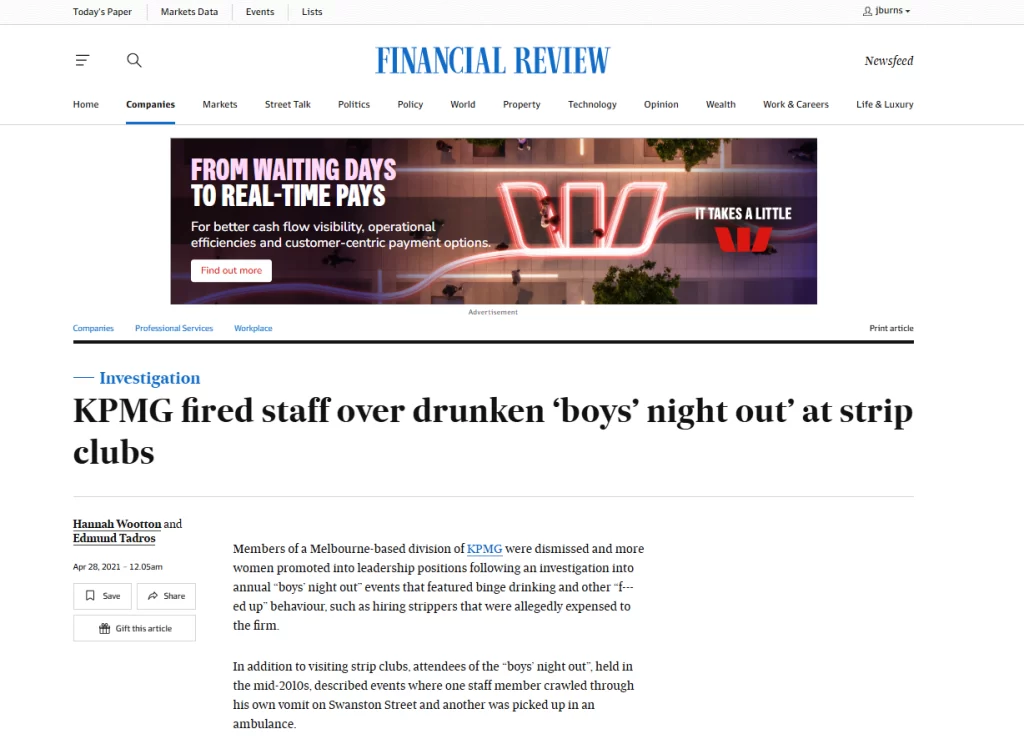
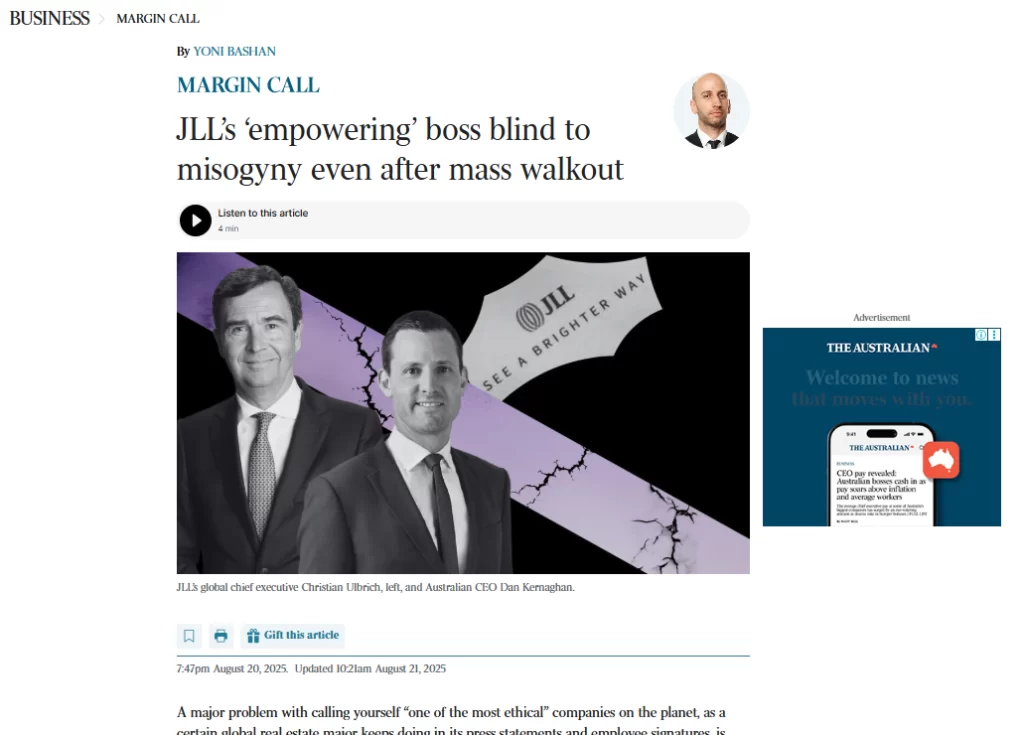
Consider these two headlines, published four years apart: one from 2021, where KPMG fired staff over a “boys’ night out” at strip clubs, and another from just days ago (20 August 2025), where JLL’s Australia boss was accused of being blind to misogyny even after a mass walkout.
The contrast is stark. One signals accountability. The other signals denial.
As reported by The Australian, JLL’s local CEO was sacked the following week but the juxtaposition remains telling: two sectors moving at very different speeds on cultural reform.
Big Law’s reckoning
Big Law began its cultural reckoning close to a decade ago, when firms and professional bodies overhauled policies to encourage lawyers to report misconduct and dismantle the perception that top performers were protected.
The irony is not lost, given that law firms are the beneficiaries of the legal work stemming from those same abuse of power matters.
For decades, the professional partnership structure emboldened law firms to tolerate toxic behaviours from rainmakers. When profit is pocketed by a fortunate few, others can bear the consequences of misconduct.
The abuses of power took many forms including sexual misconduct, bullying, intimidation, and unreasonable work demands.
Today, however, many law firms act quickly when abuses occur. Whereas once misconduct was quietly swept aside, now there are visible consequences.
Some legal sector commentators consider lateral mobility has made rainmakers even more powerful. That threat of mobility applies equally in commercial real estate where the top dealmakers are akin to cash cows, generating millions in revenue. This mirrors exactly what Big Law, and the Big 4, once faced: rainmakers whose financial value insulated them from accountability.
Why commercial real estate should pay attention
It’s important not to paint either Big 4 or Big Law as cultural paragons. They remain subject to Fair Work claims and ongoing allegations of harassment, bullying and abuses of power. These sectors are far from flawless but they are further progressed in their cultural evolution. Their willingness to acknowledge misconduct, act on it, and disclose outcomes sets a higher bar than industries like CRE.
According to WGEA data, women account for fewer than 35% of employees across property-related industries in Australia — and representation drops even further at senior executive and sales levels.
The Australian’s Property Editor predicts commercial property’s day of reckoning is coming: “Rather than being a rogue house, JLL’s hotbed of bad behaviour is a problem for Australia’s commercial property industry as a whole. How did it get this bad and what now?“.
Commercial real estate is on notice. In addition to having a crisis communication firm on speed dial, proactive, preventative culture management must become part of the CRE operating model. Accountability delayed is accountability denied.